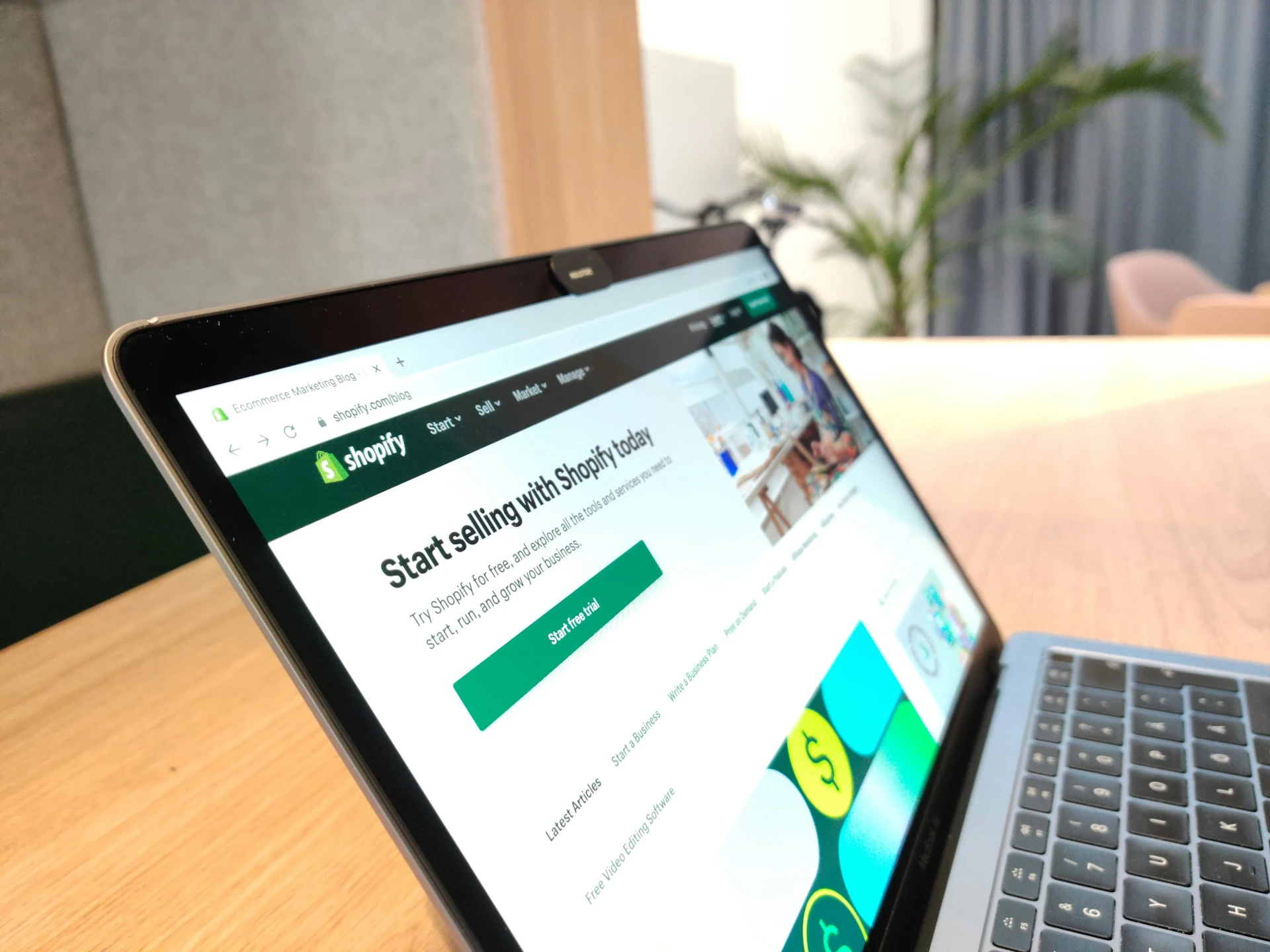
Store setup
Shopify store configuration, domain connection and essential store settings.

Fill in your details and we'll get back to you shortly.
Free Consultation from Top Industry Experts
We build Shopify stores with clear product navigation, responsive layouts, practical integrations, and a checkout experience designed around your customers.
Discuss your project ↗Shopify store configuration, domain connection and essential store settings.
Brand-aligned theme customisation with responsive page layouts.
Product, collection and navigation structure that helps shoppers find what they need.
Supported payment, shipping and app configuration based on your store requirements.
Editable metadata, internal linking, image alt text and redirect planning.
Store testing, a launch checklist and guidance for managing products and content.
Confirm the pages, functionality, assets and project scope.
Shape a responsive layout around your brand and customer journey.
Develop, review and test the agreed website features.
Complete the launch checklist and hand over the website.
Project pricing depends on the number of pages, content, functionality and integrations. Share your requirements so we can confirm the deliverables, timeline and fee before work begins.
SERVICE GUIDE
Shopify website development connects storefront design with the catalogue, checkout journey and daily work of running an online store. Highbav plans product and collection templates, navigation, mobile usability and essential integrations. The objective is a store customers can understand and your team can operate, with technical SEO and performance considered alongside the visual design.
The service suits a new store, an existing Shopify storefront that needs clearer merchandising, or a migration from another commerce platform. We review catalogue size, variations, delivery information and the applications the business relies on. That helps separate a theme improvement from a project that needs data migration, custom functionality or a different integration approach.
We organise collections around how customers browse and compare products. Navigation, filters and product relationships should make the catalogue manageable without generating confusing duplicate destinations. Product templates need useful specifications, variant selection and delivery or return information where supplied. We also review internal links so the store’s important collections are reachable through more than a search box.
A responsive storefront needs legible product information, usable controls and a clear path to cart. We review image handling, theme sections and application scripts that affect performance. Reusable content blocks help the merchant update promotions without breaking layout. Accessibility checks consider keyboard interaction and understandable form feedback, while checkout customisation is assessed against the capabilities of the selected plan.
A store migration needs a product and URL inventory, redirect mapping and checks on important data relationships. We review canonical signals and collection-product paths alongside sitemap and indexing behaviour. Integrations are evaluated for the real business task and their effect on the storefront. Payment, shipping, tax configuration and specialist third-party systems require clearly agreed ownership and testing.
Discovery confirms catalogue requirements, platform access and the launch scope. We design the navigation and key templates before building reusable storefront sections. Testing covers product selection, cart behaviour, mobile layouts and the agreed integrations. Migration projects add redirect and data checks. Handover explains the editing workflow, application dependencies and where ongoing maintenance or platform support will be needed.
We assess whether customers can discover products, understand the offer and complete the intended shopping journey. Page performance, conversion events and catalogue errors provide useful post-launch checks. A theme launch does not guarantee higher revenue; merchandising, demand, stock and fulfilment still shape the result. Measurement should make those dependencies visible.
We recommend the approach after reviewing the catalogue, brand requirements and budget. A suitable theme can be extended where it supports the journey. Custom sections or a more bespoke build are considered when they solve a specific need rather than add maintenance without a clear benefit.
A migration plan can preserve suitable destinations and map changed URLs to relevant replacements. Product data, variants and collection relationships need separate checks. We review the source platform and data quality before confirming the migration scope or promising that every URL can stay identical.
Platform charges, paid themes and third-party application fees are separate unless the proposal says otherwise. We identify likely dependencies before implementation. Reducing unnecessary applications can simplify maintenance and performance, but essential business functions still need a dependable solution.